None of Us are Good at Tragedy

All of the wrong things will be said.

And we will never hear enough of the right things.

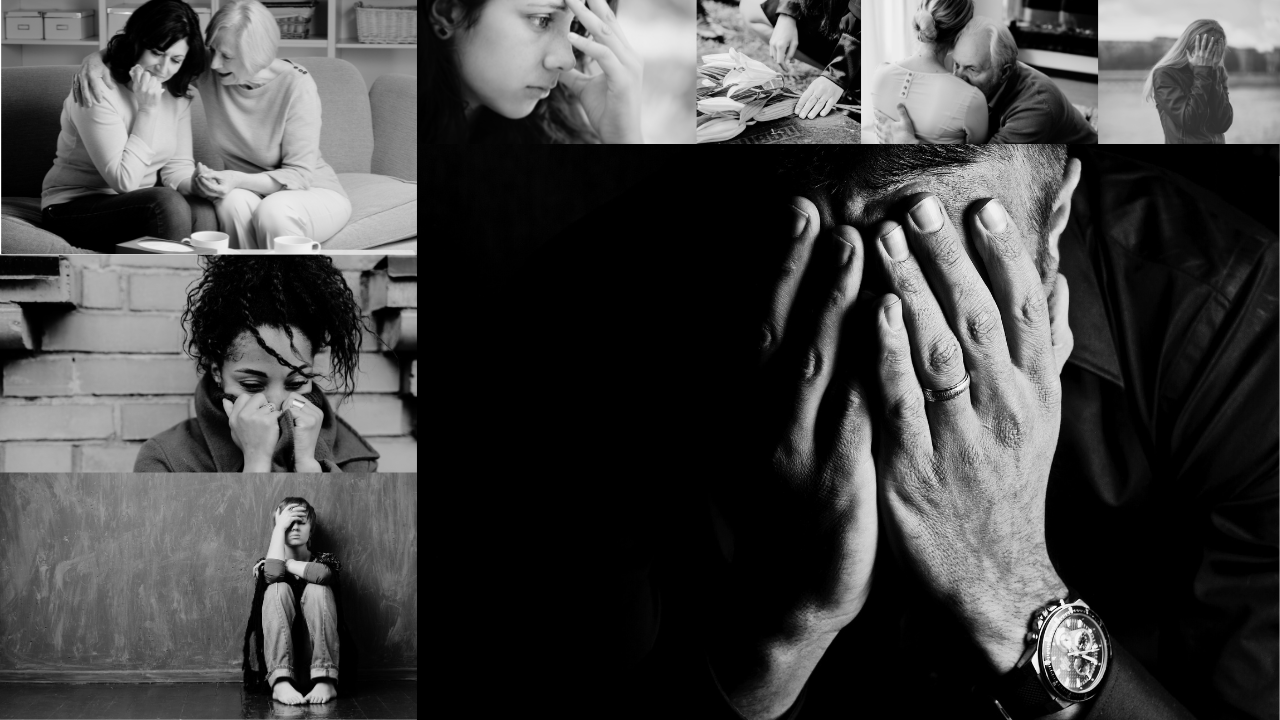
The sadness, shock, and the fact that most of us are ill-equipped to deal with the bad stuff, the sad stuff, the unexpected, and especially grief means that we will likely screw things up. And we will screw it up more than once. I’ll say it again, none of us are good at tragedy.

As news of the D.C. crash broke, our sadness and disbelief quickly moved into blame, conspiracy theories, and political division.

If you’ve ever found yourself in a situation where you needed to offer grace, empathy, sympathy, aid, or any kind of support, you know that these things are not easy to do. Most of us spend our lifetime trying to avoid the bad stuff. It makes sense. None of this comes naturally. We are all flawed humans. No one wants to be in a situation like this. And yet, the reality is that we will experience tragedy and experience it more than once.

In these vulnerable times, we feel the need to clap back, answer back, and make sure that we’re heard…and maybe we shouldn’t. As we try to “do something,” soothe our own anxiety and find reason and explanation for the unexplainable, our sadness manifests itself as anger. Rather than crying, we lash out or worse—we post a zillion things on social media. According to therapists, everyone wants to be helped, heard, or hugged in times of stress or crisis. So often, in our attempts to satisfy these needs ourselves, we take the easiest route and cast blame while screaming at the top of our lungs, “This isn’t fair! It’s not right!” And it isn’t. The hardest part of tragedy and grief exists in the silence. Seeking to be helped, heard, or hugged may meet a need in the moment, but true healing is a long and slow process.

We can’t win here. People want answers, demand answers, and in the haste to give the people answers, we can say some pretty nasty things. We say unhinged things. We say dismissive things. We even make up things. We’ve been conditioned or maybe entitled to feel like we need to know and we need to know right now. Oftentimes we turn to authority figures, experts, and the news media for answers forgetting that they, too, are flawed humans who are also not good at tragedy. We love to make our politicians, law enforcement, religious leaders, and anyone who we don’t like or agree with into the enemy when we should be coming together in love, empathy, and understanding. While we can’t do much in these times of tragedy, we can honor others by offering prayers and extending peace.

You already know this, but these things are cyclical. We have quickly moved from disbelief and sadness to blame and now we’re learning the stories of the lives of the precious souls on Flight 5342 and in the helicopter that night. We mourn the loss while seeking answers and then we will wait. The news cycle, the political discourse, and life move on.

I am not good at tragedy. My heart has been broken enough times to know that this is part of life and no one escapes it. I take seriously the call to do no harm and offer my deepest condolences to the families and friends of those lost.

The Lord is close to the brokenhearted and saves those who are crushed in spirit. Psalm 34:18

A (Figurative) Kneeler in Every Home (A Call to Act Rather than Complain)

As a kid, I spent a lot of time at my grandmother’s house. I credit her with teaching me so many things (some of the biggest parts of my personality I can directly attribute to her), but the most important thing she taught me was how to pray. Through her, I learned that I was created on purpose and for a purpose. She took me to church and reminded me that God loved me unconditionally. She showed me that nothing was beyond forgiveness. In my opinion, she was the greatest example of a Christian woman I have ever known.

In her home, she had a kneeler. I don’t think I’ve ever been in a home with its own kneeler (before or since). It was a beautiful piece, made of wood with a lovely stain and it had a velvety cushion for your knees. (There’s a chance that my Papa made it, but I’m not 100% sure.) If you’ve never seen a kneeler I asked AI to generate what I can remember and the above rendition is pretty close. I was absolutely enamored with it! It was like having a church in your own house! The kneeler was designed to fit an adult, so as a small child, I couldn’t kneel and rest my hands on the top to pray. I knew you weren’t supposed to stand on the cushion, so what was a kid to do?

My grandma told me that you didn’t need a kneeler to pray. You could pray anywhere and at any time. While I knew that someday I would be able to reach the top of the kneeler, that little piece of assurance stuck with me. As a kid, I was plagued with nightmares. Praying helped. I’ve been a news junkie since I was in grade school and knowing about a big scary world caused me to worry and fear. Praying helped. Moving away from home and my support network was hard. Praying helped. Notice that I said that praying helped. It didn’t magically solve everything, but what it did do was deepen my faith and relationship with God. A God who pursues each of us, who hears and understands our worries and concerns, and reminds us that we are not alone even on the most friightening days.

It’s disheartening to know that so many disregard the power of prayer. It’s become a mode of attack in our modern culture to mock those who extend thoughts and prayers in times of crisis or as a way of offering comfort. Understand that praying people know that they are not lifting up their worries to a genie in the sky who will magically fix the ills of the world. Those of us who pray know that God is so much larger than that interpretation. The power of prayer is in the communication with our Creator. This is not lip service. Fervent prayer is action. It is often through prayer that we are called to act AND do more as we respond to the needs of others.

In the uncertainty of this new year, I have seen so many seek to complain and rile up their circles and communities. Many are calling out others, dividing families and friend groups, asking each other to take sides, and demonizing those who have differing thoughts and opinions. Several are canceling those who they once considered close and blocking people who they once called family or friends. This does so much more harm than good and it’s not taking place among those who don’t believe, this is happening within our own churches and communities of faith.

This is now a time for real in-depth conversations, in-person relationships, and profound listening. These things don’t take place in news stories, political chatrooms, or on social media. They take place around the table, in homes, and with open minds and hearts.

Please do not contribute to the hate, division, and fear that currently surrounds us. Pray and ask for discernment. Ask God to use you. Think before you speak (or post) so that you can be a source of hope and peace. Prayer is action. In this distressed world, many only contribute to the anxiety by spreading information that has not been fully researched or confirmed. News and information move at lightning speed and it is easy to get caught up in this vicious whirlwind.

At this point, I am again reminded of my grandma and her assurance that we can pray anywhere and at any time. I am more certain than ever that we need a (figurative) kneeler in every home to pray and hear God’s call and we need real-life, in-person conversations to listen and respond with compassion in order to truly make a difference, even if it’s only in our own tiny corner of the world.

This is not lip service. Fervent prayer is action.

In my distress I called upon the Lord; to my God I cried for help. From his temple he heard my voice, and my cry to him reached his ears. Psalm 18:6