The Altars We Didn’t Know We Made (or Needed)

Remember me
Though I have to say goodbye
Remember me
Don’t let it make you cry
For even if I’m far away I hold you in my heart
I sing a secret song to you each night we are apart

Remember me
Though I have to travel far
Remember me
Each time you hear a sad guitar
Know that I’m with you the only way that I can be
Until you’re in my arms again
Remember me

REMEMBER ME (LULLABY)

Let’s be honest—thanks to popular culture, there is curiosity around El Día de Los Muertos, or Day of the Dead. This Mexican holiday is celebrated on November 1 and 2 to honor and remember deceased loved ones. It is a joy-filled remembrance of life that involves building altars (ofrendas) with offerings, visiting and/or decorating graves, and sharing memories with family. The holiday blends ancient Mesoamerican and Spanish traditions into a celebration that welcomes the spirits of the dead for a brief reunion.

In recent years, this observance has taken on new meaning for me as more loved ones have passed from this life. It may sound selfish, but the idea of dedicating time to remember the most important people in our lives feels far more significant than some of the material-centered holidays we often celebrate. And while Día de los Muertos can be a grand, communal celebration, it can also be quietly observed in solitude.

Lately on social media, many creators have shared their stories, videos, and photos of their ofrendas. Some are elaborate and ornate, while others are simple and serene. Both are equally meaningful. At the same time, I’ve noticed conversations about who is “allowed” to participate, with some insisting on cultural credentials to take part in this day of remembrance. Yet, the overwhelming sentiment remains: we’ve all experienced loss, and the desire to honor those who shaped us is something universal.

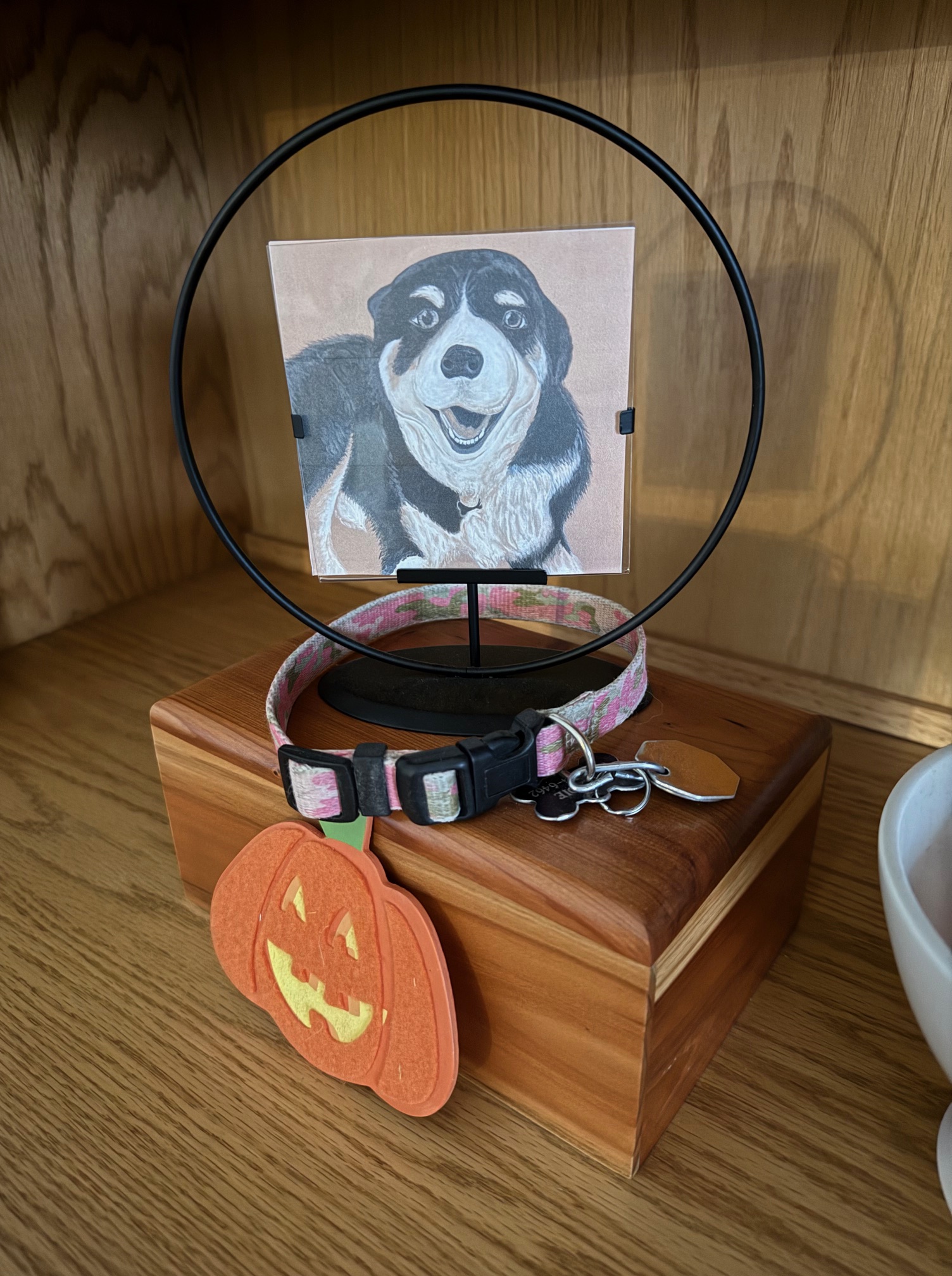
A few days ago, I began putting out my Halloween decorations. As a 50-year-old empty nester, I don’t need to do this—and some might argue I shouldn’t—but Halloween has always been one of my favorite holidays. I have such fond memories of it from childhood and of celebrating it with my own kids. What started as a plan to display a few old photos of my kids in their costumes quickly turned into a full-blown decorating session. On the built-in shelves, I decorated every corner, including two spaces where I already have photos of my mom and mother-in-law, and my sweet dog, Madeline.

These memorials stay out year-round. In realizing that, I saw that I had already created my own version of an ofrenda—a quieter one, perhaps, but deeply meaningful. It’s something I see every day. A space that holds memories 24/7. A space I could never imagine packing away. Every time I look at it, I thank God for blessing me with such beautiful souls in my life, even if only for a season.

In the Bible, altars were sacred spaces for worship, sacrifice, and offering—first built by Noah, Abraham, and others. They were places of remembrance, of unity, of meeting with God. Thinking about that reminds me of one of my favorite passages, Joshua 4:6–7, where God tells His people to stack stones by the Jordan River as a lasting reminder of what He did for them:

“In the future, when your children ask you, ‘What do these stones mean?’ tell them…”

Both the altar and the memorial stones tell the same story: that remembering matters. That marking what—and who—has shaped us is a sacred act.

I’m not going to tell you to build an altar in your home or decorate an ofrenda. But I will encourage you to make space for remembrance—a moment, a corner, a conversation, or even a prayer—to honor those who came before you and hold space in your heart. Whether through tradition, faith, or personal reflection, remembrance roots us in gratitude.

After all, memory itself is sacred.

Now, tell their stories.

A (Figurative) Kneeler in Every Home (A Call to Act Rather than Complain)

As a kid, I spent a lot of time at my grandmother’s house. I credit her with teaching me so many things (some of the biggest parts of my personality I can directly attribute to her), but the most important thing she taught me was how to pray. Through her, I learned that I was created on purpose and for a purpose. She took me to church and reminded me that God loved me unconditionally. She showed me that nothing was beyond forgiveness. In my opinion, she was the greatest example of a Christian woman I have ever known.

In her home, she had a kneeler. I don’t think I’ve ever been in a home with its own kneeler (before or since). It was a beautiful piece, made of wood with a lovely stain and it had a velvety cushion for your knees. (There’s a chance that my Papa made it, but I’m not 100% sure.) If you’ve never seen a kneeler I asked AI to generate what I can remember and the above rendition is pretty close. I was absolutely enamored with it! It was like having a church in your own house! The kneeler was designed to fit an adult, so as a small child, I couldn’t kneel and rest my hands on the top to pray. I knew you weren’t supposed to stand on the cushion, so what was a kid to do?

My grandma told me that you didn’t need a kneeler to pray. You could pray anywhere and at any time. While I knew that someday I would be able to reach the top of the kneeler, that little piece of assurance stuck with me. As a kid, I was plagued with nightmares. Praying helped. I’ve been a news junkie since I was in grade school and knowing about a big scary world caused me to worry and fear. Praying helped. Moving away from home and my support network was hard. Praying helped. Notice that I said that praying helped. It didn’t magically solve everything, but what it did do was deepen my faith and relationship with God. A God who pursues each of us, who hears and understands our worries and concerns, and reminds us that we are not alone even on the most friightening days.

It’s disheartening to know that so many disregard the power of prayer. It’s become a mode of attack in our modern culture to mock those who extend thoughts and prayers in times of crisis or as a way of offering comfort. Understand that praying people know that they are not lifting up their worries to a genie in the sky who will magically fix the ills of the world. Those of us who pray know that God is so much larger than that interpretation. The power of prayer is in the communication with our Creator. This is not lip service. Fervent prayer is action. It is often through prayer that we are called to act AND do more as we respond to the needs of others.

In the uncertainty of this new year, I have seen so many seek to complain and rile up their circles and communities. Many are calling out others, dividing families and friend groups, asking each other to take sides, and demonizing those who have differing thoughts and opinions. Several are canceling those who they once considered close and blocking people who they once called family or friends. This does so much more harm than good and it’s not taking place among those who don’t believe, this is happening within our own churches and communities of faith.

This is now a time for real in-depth conversations, in-person relationships, and profound listening. These things don’t take place in news stories, political chatrooms, or on social media. They take place around the table, in homes, and with open minds and hearts.

Please do not contribute to the hate, division, and fear that currently surrounds us. Pray and ask for discernment. Ask God to use you. Think before you speak (or post) so that you can be a source of hope and peace. Prayer is action. In this distressed world, many only contribute to the anxiety by spreading information that has not been fully researched or confirmed. News and information move at lightning speed and it is easy to get caught up in this vicious whirlwind.

At this point, I am again reminded of my grandma and her assurance that we can pray anywhere and at any time. I am more certain than ever that we need a (figurative) kneeler in every home to pray and hear God’s call and we need real-life, in-person conversations to listen and respond with compassion in order to truly make a difference, even if it’s only in our own tiny corner of the world.

This is not lip service. Fervent prayer is action.

In my distress I called upon the Lord; to my God I cried for help. From his temple he heard my voice, and my cry to him reached his ears. Psalm 18:6

Saudade and No Return to Normal (A Life Interrupted)

“Grief has two parts. The first is loss; the second is the remaking of life.”
Anne Roiphe, Author

In the last few months, it has become blatantly clear, you can neither rush nor postpone grief. The process will not be denied. I’m guilty of trying to move forward too quickly. Guilty of trying to rush through the stages of grief. I know several others who have taken the opposite approach. They try to bury it—and I say try because grief always resurfaces and often when you least expect it. And grief is clever as it not only shows up as sadness, but it also manifests as anger, apathy, restlessness, self-destruction, and even fear. Not only will the grief process not be denied, wrestling with grief is exhausting, too. For this reason, I am tired. So incredibly tired.

My Mom liked word puzzles and games. Games were an important part of our childhood and we played to win. Like her, I love a challenging crossword and board games of all kinds. I often tell my kids that “knowledge is power” and it’s important to never stop learning. My Mom would tell me that she loved playing games on her iPad because they helped to keep her mind sharp. Maybe that’s why I follow so many “word of the day” Instagram accounts. I, too, believe in trying to keep a sharp mind.

Last month I came across the word saudade and it hit me like a rock. This word describes exactly what I feel right now. SAUDADE: a deep emotional state of melancholic longing for a person or thing that is absent. When I dug a little deeper (keeping my mind sharp through research skills, thanks Mom,) I found out that it has Portuguese roots and is often described as a word so complex in meaning that has no direct translation. It is used to describe a suffering kind of love with the type of yearning that is often expressed in song because words are just not enough. This type of melancholic longing is for someone or something that one laments because it is likely that this love will never (ever) be experienced again. My own interpretation of saudade is that it’s the love for someone or something that you can never get back.

My own interpretation of saudade is that it’s the love for someone or something that you can never get back.

Saudade and no return to normal (a life interrupted)

I feel this kind of love for my Mom. I will love her forever all the while knowing that I cannot have her back. I can feel her presence, I see her in my dreams, I believe she walks with me, I can hear her voice, yet I cannot have her back. The feeling is so hard to put into words and yet it is a feeling experienced by so many who have lost loved ones, whether through distance, broken relationships, or death. SAUDADE.

While I wrestle with this personally, I can’t help but feel like the whole world is feeling this collectively. SAUDADE. Throughout history, there has been struggle and strife, war, famine, natural disasters, and yes, even pandemics. In an already divided world, and in an especially divided country, the pandemic has hit especially hard; not just because it’s the pandemic that we’re experiencing in our lifetime but because we had and have so much to lose. And slowly, each and every day it feels like we’re losing more and more. Thus our longing for a sense of normalcy, for relationships, for security, and for those we have lost to COVID-19 continues to grow. Needs unmet. Love and longing for someone or something that you can never get back.

In Brazilian literature, the word saudade conveys loneliness alongside this deep melancholic longing. Portuguese author, Aubrey Bell, describes saudade as “a constant desire for something that does not and probably cannot exist, for something other than the present.” Sit with that for a minute. We, too, are longing for something more than our present condition. And while there has been much talk of a “return to normal,” after 18+ months of living with the current pandemic it appears that what we once regarded as normal will not return. Ever. Coincidentally, Bell wrote those words in 1912 just before the Flu Pandemic of 1918 and they seem apt for the COVID-19 pandemic as well.

When I tell people about my Mom’s death from COVID-19 I am hit with a slew of questions. The first is always, was she obese? Followed by did she have comorbidities? Then, how old was she? I’ve even had someone pat my hand and tell me that ethnicity probably had something to do with it.  Let me tell you this—if someone tells you that they’ve lost a loved one, (COVID-19 or not) the first words out of your mouth should always be, “I am sorry for your loss.”  Please, reserve your judgment and critique.  I understand that you are likely speaking out of your own fear, but for those of us experiencing the loss, we are forever living the definition of no return to normal.  

I am longing for my Mom in the midst of vaccine wars, political divisiveness, threats of who deserves access to health care, racial inequity, masks vs. unmasked, infighting within the church, misinformation, name-calling, conspiracy theories, public shaming, and cancel culture…honestly, the list is endless. I am tired. We are all tired from all that has been endured and lost.  SAUDADE.  Still, we cannot see past ourselves, our desires, our sense of entitlement. No one is coming out of this unscathed.  Mentally, physically, emotionally, financially, and personally, we have all been affected in one way or another.  Healing begins when we acknowledge the losses, stop judging one another, recognize our grief, and collectively move forward together.

“He comforts us in all our troubles so that we can comfort others.” 2 Cor 1:4


“A Life Interrupted” is an ongoing series of blog posts dealing with the loss of my mother to COVID-19.
The First Thanksgiving: Pairing Grief AND Gratitude (A Life Interrupted)

Sometimes, only one person is missing, and the whole world seems depopulated.

Alphonse de Lamartine, author
The Thanksgiving Table (November 2020)

I did it. But I wish I didn’t have to.

I made a full Thanksgiving meal on my own. I roasted a turkey. Peeled a mountain of potatoes. Used the drippings to make gravy. Baked a pan full of dressing, green beans, dinner rolls, an apple crumb pie, plus loads of turkey-themed cookies. I even opened a can of cranberry sauce (it’s okay, you can laugh at me). In all my 45 years of life, I’ve never done this before…never attempted to, never wanted to, and never needed to—but these are strange times that we’re living in and strange times apparently demand complete turkey dinners on Thanksgiving…especially when your Mom is gone.

The duality of living in today’s pandemic is evident everywhere you go. In one day you can see groups of friends hanging out and carrying on without a care in the world and turn the corner to see fully masked families heading into the local grocery store. Our elderly suffer from isolation in their golden years and our healthcare workers are overwhelmed and stressed while millions of others continue to call COVID-19 a hoax to their faces. Daily, Americans walk through temperature checkpoints to get to school, work, or to travel while others plan block parties and the like. There are rallies and protests. I even read about some well-meaning parents who hosted a homecoming dance and now dozens of kids have tested positive. I’m not judging. My own family walks in this duality. We occasionally see local friends, we work outside our home, my kids go to the gym, play sports, and try to maintain normalcy all while walking this line with masks in hand. I jokingly remind them “it’s COVID out there” and ask them to stay socially distanced as they head out the door. When they come home, I greet them and immediately send them to the sink to wash their hands. We’re not perfect. At this point in the pandemic, we’ve all had moments where we’ve let our guard down and subsequently prayed that we don’t pay the penalty. Strange times, indeed.

Nine months in and I can no longer count the number of family members who have contracted COVID-19 on my fingers. I don’t want to attempt to count the number of people in my circle who have had it and my heart breaks when I think about how the Coronavirus has affected my hometown in western Kansas. I have prayed for a number of individuals who have battled, struggled, and won. Praise God! And I have cried for those who weren’t so fortunate. As I write this the death toll in the United States is 267,000+

My mother is one of them.

It’s bizarre to grieve in a pandemic. The normal grieving process is both individual and communal, but when you can’t see family members for fear of contracting or spreading a virus, the grieving process becomes even more peculiar. And when your lost loved one is a victim of that same pandemic, you proceed cautiously and carefully. Honestly, there are days where it feels like you’re barely proceeding at all—like you’re standing still while the world has moved on.

You know the saying, “once bitten, twice shy?” Those are the eggshells that I walk on daily. I know how devastating and life-changing this virus can be. There are hundreds of thousands of people who should have been at the Thanksgiving table with their families this year, but they’re not. Empty chairs, not just in my home, but everywhere. Traditions not just broken, but shattered. Those of us who have lost family members and friends to COVID-19 are experiencing this heartbreak over and over as the narrative has gone from “we’re all in this together” to “there’s nothing to see here, folks.” And yet the pandemic and the loss of life go on.

There are hundreds of thousands of people who should have been at the Thanksgiving table with their families this year, but they’re not. Empty chairs, not just in my home, but everywhere. Traditions not just broken, but shattered.

a Life Interrupted

As we move into this unusual holiday season I can feel myself picking up the pieces of my broken heart non-stop. Normal Thanksgiving meant a road trip across the state with my kids. Normal Thanksgiving meant consulting with my mom, sister and sisters-in-law about what we would each contribute to the meal. Normal Thanksgiving meant hugs and seeing my nieces and nephews. Normal Thanksgiving is game nights, snacks and cousin sleepovers. Normal Thanksgiving is coffee with my best friend. Normal Thanksgiving meant going to my mom’s house instead of making a complete Thanksgiving meal on my own.

I did it. But I wish I didn’t have to. In fact, I would have traded anything for it not to be the way that it is.

It was the first Thanksgiving without my Mom and at every turn, we paired our grief with gratitude. I miss my mother so much and my appreciation for the time we had together has continuously grown. Today, I am even more thankful and grateful for her love and influence on my life. Often times I feel like my mother’s memory lives in the kitchen which was so appropriate as I prepared the meal. And while she has been on my mind constantly, in missing her this Thanksgiving I felt like she was very present…somehow still mothering me…urging me to make the most of the holiday, not just for me, but for my kids. That’s the kind of mother she was. Give, give, and give some more. Grieve, but be grateful. In the back of my mind, I kept hearing “keep the traditions.” In my heart, her memory confirmed the feeling that forward is the best option, the only option.

If you know me, you know I take tons of photos and videos. I document everything. (It’s the reporter in me). As Thanksgiving approached this year and the memories started popping up on social media, my daughter said to me, “Mom, I’m so glad you take all the photos and the videos so we can see and hear each other. It makes me sad, but it also makes me happy. We laugh a lot.” Taking photos and videos to share this Thanksgiving seemed extra important. And Casey is right, we do laugh a lot. In many ways, sharing photos and videos are the only way for the whole family to be together while we continue to grieve miles apart.

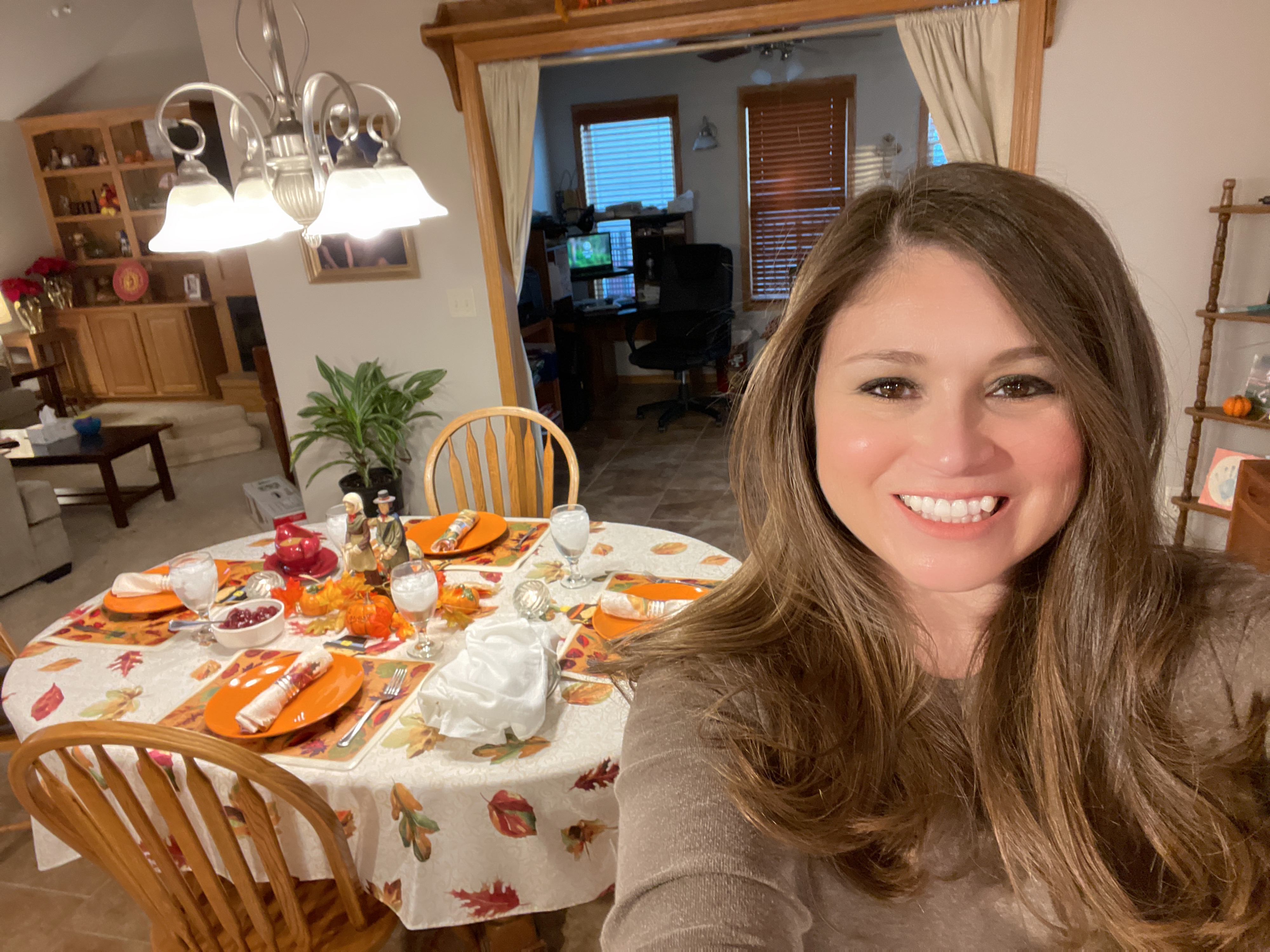
In the mix of photos I took this year is this one of me at our Thanksgiving table just before the meal was served with an accomplished grin on my face. And guess what, Mom? I didn’t break the oven like I did that time I tried making strudel! I know you’re proud…and maybe even a little bit relieved. We saved you a seat.

“In the day when I cried out, You answered me, and made me bold with strength in my soul.” Psalm 138:3


“A Life Interrupted” is an ongoing series of blog posts dealing with the loss of my mother to COVID-19.

Today, I Screwed Up the Rice (A Life Interrupted)

“Cooking and mealtimes are some of the most overlooked aspects of grief,” Heather Nickrand, author of Culinary Grief Therapy

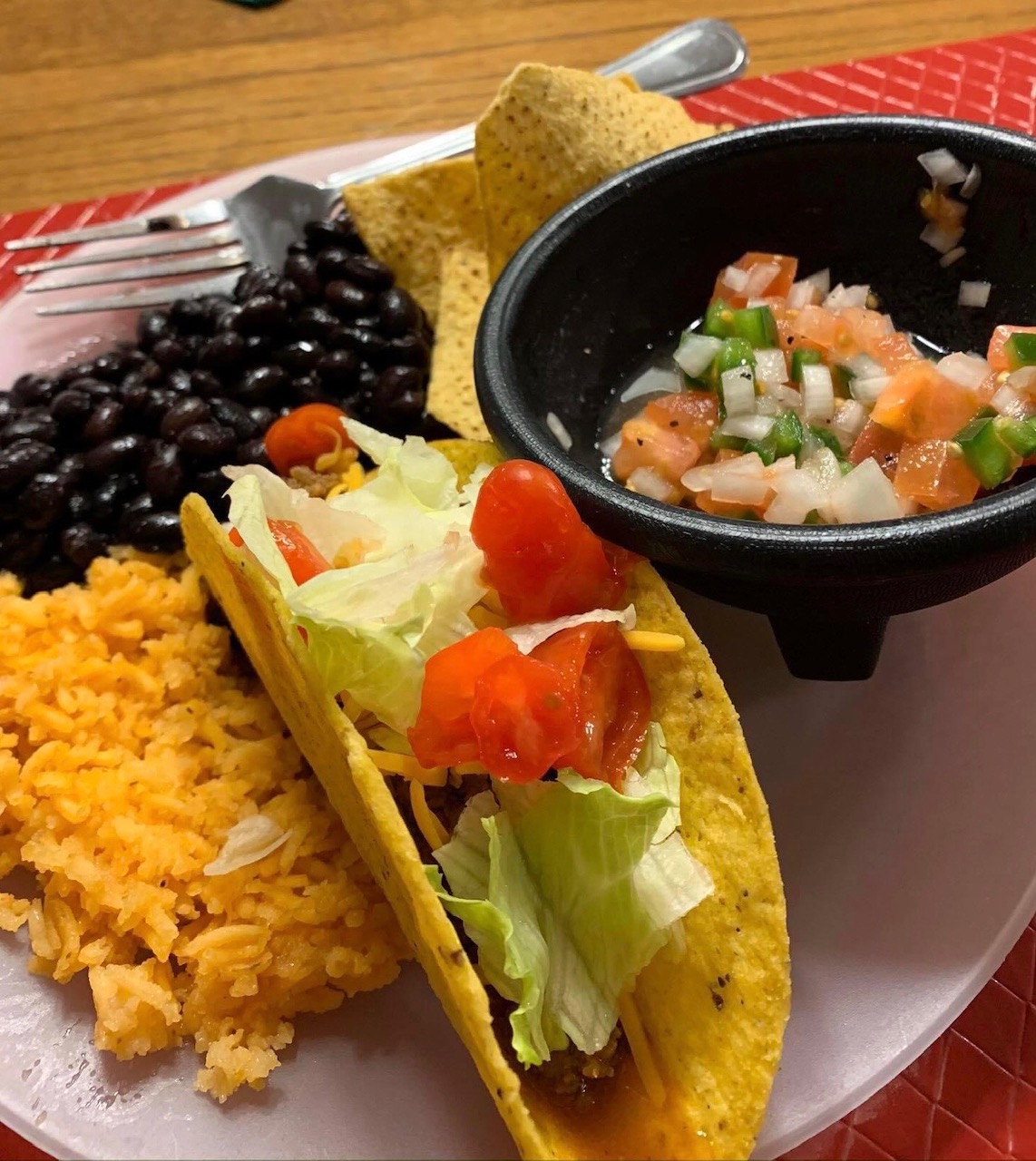
Taco dinner complete with pico de gallo, black beans and Mexican rice.

My mother was a fabulous cook. She had this amazing way of making something truly delicious out of nothing at all. Looking back, she would have been a great contestant on The Food Network show, “Chopped.” You know the one where they give you a mismatched basket of food items and ask you to miraculously make something amazing out of it in 15 minutes flat. She was that good. One of my favorite memories of her cooking was just how much she could do with eggs. She could make them a million ways and they were always BOMB—and if she had cheese and tortillas—lookout because you were about to meet your new favorite dish. Breakfast for dinner was an absolute treat as a kid. She was creative, innovative, and basically a food magician. I miss this about her.

I’m not really a cook. I mean, I do cook, but I’m definitely not on her level. I am a baker though. We complemented each other this way. She would make my favorite dish when I would visit home (tostadas) and I would make oatmeal chocolate chip cookies or apple pie. In those moments, all was right with the world. And while I don’t consider myself a great cook, most of what I know, she taught me.

When my son was still a baby she showed me how to make Mexican rice. Sean loved to eat it, it was soft, fluffy, and flavorful. I can remember the first lesson in my kitchen and the subsequent lessons in her kitchen as she helped me perfect it. Mom cooked according to looks and taste, I, however, needed a mathematical formula. Through a series of trials and errors, I finally figured it out. Using an equation (yes, I am a nerd), I can figure out how to make any amount of Mexican rice needed to feed any size group. You can call it a gift…but mostly it’s a nerd thing.

After my Mom passed away, life was a blur. Daily chores were neglected, my mind foggy, I felt extremely lost. I’m sure I was exhausted in every sense of the word—mentally, physically, emotionally, spiritually…you name it. And yet, people needed to eat. It was probably three weeks later when I finally got around to cooking something “real.” I decided on tacos, a dish I was certain I could make in my sleep, and of course an accompanying pan of Mexican rice. Every part of the process was agonizing. Each ingredient a tangible reminder of the mother/daughter and teacher/student relationship we had when it came to food. I immediately went to my Mexican rice math equation, but there was nothing. After almost two decades of memorization, my reliable recipe (formula) escaped me. I stood there looking at an empty pan, uncooked rice in hand and I couldn’t remember step one. Nothing, then tears.

I remember thinking, please, Lord, don’t let me forget this! I need to know how to do this. I can’t lose this. I’ve already lost too much. Please, help me to remember.

Here is the part where you might expect a sudden revelation. I hate to tell you this, but there was none. I tried. I cried. I screwed up the rice. Not only that, but I screwed it up the next time and the time after that. Time and time again I stood there, dumbfounded and lost. In the big scheme of things, forgetting how to make Mexican rice doesn’t seem like a disaster and yet it was. It all was. The pandemic, losing my Mom, coping, and trying to move on. It was all a disaster. The kids ate variations of crunchy, under seasoned, too wet, blah tasting Mexican rice…encouraging me all the way. I can remember my daughter, Casey, saying, “You’ll figure it out. Go slow.” These are phrases that I often say to my kids when they’re struggling and being hard on themselves. Hearing these words directed at me stopped me in my tracks. When a child repeats something you have frequently (or incessantly) told them it’s a parenting compliment, a parenting win. Honestly, though, I think it’s just called the circle of life.

I remember the frustration of learning new things as a child. Somethings came naturally, but for me, cooking wasn’t intuitive. My Mom was always gracious in her teaching. I went to college only knowing how to make cereal and grilled cheese, but through her guidance (and many telephone calls) learned to make so much more! I went through my Rachel Ray phase about the same time the internet and smartphones became a part of daily living enabling me to share my mealtime creations with just a click. I remember a phone conversation where she walked me through making a rue. I was terribly unsuccessful. We tried an in-person lesson on my next visit home. Still unsuccessful. It probably took me five years to learn, all the while she would say, “You’ll figure it out. Go Slow.” Yes, definitely, the circle of life.

You might be surprised to know that cooking wasn’t my Mom’s favorite thing. Talented as she was, and I’m convinced food was one of her love languages, she did it for us and for others lucky enough to be at her kitchen table. And, she always made it fun! I come from a large family, so preparing meals for gatherings was time-consuming. No matter, we all just piled into the kitchen and got to work. Mom was great at delegating tasks according to our abilities. This makes me laugh because most of my expertise was in chopping vegetables while my sister, Amanda, was in charge of more complicated (and delicious) menu items that required actual cooking and seasoning. All the granddaughters would get involved —assembly-line style—for enchiladas (a family favorite!) No one ever complained as being a part of Mom’s kitchen crew meant lots of taste testing and samples. A huge perk to the process! By far, the biggest win for me personally was the day my Mom complimented me on my Mexican rice. I carry those words around like a badge of honor, then and now.

So when I failed to remember how to make the Mexican rice, it felt like I was losing something special. In true resolute fashion, I refused to give up. With my Mom’s words in my head, I kept trying. Shortly after she passed I came across a social media post that said, “Be the things you love about the people who are gone.” I saved it on my phone, a poignant reminder on the hardest days. I’m not a cook. I don’t believe I’ve been gifted with that ability, but for my family, cooking and time in the kitchen were so much more than that. I believe my Mom cooked because she loved us and it kept us close. The kitchen was always the center of our home life growing up. The heart of the home, it’s still one of the rooms I spend the most time in, my kids, too.

It’s been more than four months now, and I’m not screwing up the rice anymore. I finally remembered the recipe (formula) and hope that I’m never in a place to forget it again as part of my Mother’s memory lives in the kitchen. She’s in every drawer as she has gifted me with a number of utensils and tools. She lives in the cupboard and the refrigerator as she has influenced the things I love to eat and feed my family. She lives on the countertop, her whiteboard taking up center stage on the kitchen island. And she’s certainly in my cookbook as I try to maintain the recipes and traditions that I’ve grown up with and pass them on to my own children.

May I be all the good things that I love about her…today and every day.

“Go and enjoy choice food and sweet drinks, and send some to those who have nothing prepared. This day is holy to our Lord. Do not grieve, for the joy of the Lord is your strength.” Nehemiah 8:10

“A Life Interrupted” is an ongoing series of blog posts dealing with the loss of my mother to COVID-19.

Renaming the Stages of Grief (A Life Interrupted)

This rainbow appeared in the sky on the evening of Mom’s funeral.

“Give sorrow words; the grief that does not speak knits up the o-er wrought heart and bids it break.”  William Shakespeare

You can call it a charmed life, a blessing or maybe it was just dumb luck, but my experience with grief has been minimal until recently.  I barely remember attending funerals as a kid and when we did, I really didn’t have a strong connection to the departed.  However, all that has changed in adulthood…especially in the last few years.  And here, in 2020, I feel like I’ve been hit with the worst heartache yet after losing my Mom.

Now that I find myself in the throes of grief I’ve become well aware of the stages that accompany it: denial, anger, bargaining, depression, and acceptance.  As I continue to process, I realize that a more apt description might be “stages of loss” rather than grief as so many therapists acknowledge these stages include every type of bereavement and are most certainly not limited to death.  Regardless of the type of loss, the stages still exist and the process is never easy.

One of my strongest personality traits is dutifulness.  I clearly get that from my parents and it’s something I’ve given a lot of thought to over the last few months.  I approach life in a resolute fashion.  I like lists…there’s a certain satisfaction that comes with crossing things off.  I also keep a handwritten calendar and methodically cross off the days (I’ve been ridiculed for this one).  I set reminders, use post-its, carry a reporter’s notepad, etc.  All of this helps me keep up with my commitments and uphold my obligations.  I know that people expect things from me and I work hard to fulfill my responsibilities. It’s important to me.  So when approaching loss I immediately went to research the stages of grief and anticipated checking them off one by one.  Let me tell you, this is not how grief works.

Turns out the stages of grief don’t necessarily go in order and they can (and often do) repeat, sometimes more than once…if not endlessly.  This is problematic for stoic types like me who eagerly want to cross things off the list and move forward.  I am not a dweller, but my pragmatic approach to grief isn’t really working out.  I’m not sure what I expected here.  I knew the road would be hard. And while most buy into “the time heals all wounds” camp, as a realist, I know that time doesn’t necessarily heal anything.  A loss will always be a loss— a hard consequence of love.

As I move through this process, I’ve taken it upon myself to rename the stages of grief…making them more applicable for me.  Do with them what you will, but I’ve found these slight variances helpful, healing, and hopeful as I continue to sort out the emotions of losing one of the most beloved figures in my life.

DISBELIEF, not denial.  I know my Mother is gone.  I very well remember speaking to her when she tested positive for COVID-19.  I recall the day she told me she scheduled the drive-thru appointment and we went over her symptoms.  I remember the first and second time she was taken to the emergency room.  I don’t deny the fear and angst that followed.  None of us can deny the three weeks she spent in ICU.  We can’t deny the emotional ups and downs that accompanied the good and bad days in the hospital.  There is no denying that she is gone, no denying the funeral, and no denying the loss.  She isn’t here and I feel it every day, but sometimes I can’t believe all of this happened.  Not to her, not to my strong Mother.  I can’t tell you how many times I still reach for my phone…to call her, to text her.  We had so many plans.

AVOIDANCE, not anger.  I’m not really an angry person.  I can get mad, I can even be a bit of a hothead if you catch me on a bad day.  I have a passionate nature, but I’ve never seen anger solve one single thing.  For me, anger has no purpose.  People have asked me if I’m angry at God.  I am not— the thought hasn’t even crossed my mind.  What I do know is that lately it’s been easier to just avoid emotion altogether.  The loss is raw and if I think about it too much the sadness can be overwhelming.  I know that’s to be expected, but I feel like I can’t live in sadness.  For better or worse, I am guilty of avoiding the emotional component of grief until it seeps out from the corners of my eyes.  I’m doing the best I can to deal with it in small doses.  Losing my Mother is not fair, but it’s not fair for anyone who loses a loved one.

UNCONTROLLABLE TEARS, not bargaining.  As I move out of the “100-day fog,” I am reluctantly beginning to accept the new normal…and right now the new normal involves a lot of tears.  I’m not bargaining, there’s nothing to bargain about.  Therapists often say that “guilt is the wingman of bargaining.”  This is the part of grief where the questions and “what-ifs” take over, followed by guilt for not doing more, making different decisions, and on and on.  What if COVID-19 didn’t happen?  What if we made Mom stay home?  What if we had sought care sooner?  What if…what if…what if…?  The never-ending questions remind me of the old adage about worrying and rocking chairs, both give you something to do, but ultimately get you nowhere.  I know better than to negotiate over things I cannot control and I guess that’s where the uncontrollable tears come in.  Death and loss, they humble you.  They remind us of our humanness, our vulnerability, and that we are most certainly not capable of controlling most things in this life.  I cry over songs on the radio, television shows, photographs, and memories…both good and bad.  If I could make things different, I would…but I can’t…and thus, the tears.  You can’t bargain with tears.

GOOD/BAD DAYS, not depression.*  In my heart of hearts, I truly believe that it’s ok to be sad.  I remember journaling once that to truly know good, one has to fully know bad.  I have been asked countless times over the last few months if I am depressed.  I am not, but I am sad, grief-stricken, heartbroken, and emotionally exhausted.  My Mother is gone.  My world forever changed.  I will miss her every day for the rest of my life.  And yet I know, forward is the only option.  Forward is the best option.  On good days, I laugh and smile remembering and retelling funny stories and sharing treasured memories about my Mom.  On bad days I pray for peace and comfort knowing how fully blessed I am to have called her my Mother.  Then, the process repeats.

PEACE, not acceptance.  In the stages of grief, acceptance comes when one faces their new reality.  There’s an understanding that things will never be the same.  For me, acceptance is not that far removed from denial.  I knew from the moment I received that phone call that things would never be the same.  Not “accepting” the circumstances didn’t make them less real.  There’s no denying the loss and accepting the situation wasn’t negotiable.  Throughout this whole process, I have prayed for peace, an emotional status where there is tranquility and my soul is well.  I have seen this.  I have experienced this.  I have felt this with my whole being.  Right now, that kind of peace is inconsistent, but I know and trust that a feeling of permanent peace will fill my heart one day.

Obviously, the grieving process is difficult.  There are no shortcuts, although most of us will try to find some.  When I talk to my kids about the stages of grief I remind them that there’s communal grief and personal grief.  The communal grief we experience together, as a family.  We deeply feel this type of loss at family gatherings and holidays.  The personal grief is how we process the loss individually.  For most of us, this type of grief is so much harder, but avoiding the stages of grief doesn’t help.  Postponing the sadness will not move us forward.  It’s ok to be sad.  It’s ok to have all the feelings.  It’s ok to talk about the loss because losing someone changes you.

Losing someone changes you.

Because the LORD is close to the brokenhearted and saves those who are crushed in spirit.  Psalm 34:18

*Depression is real.  If you need help, please reach out.

“A Life Interrupted” is an ongoing series of blog posts dealing with the loss of my mother to COVID-19.


The Great Humbling (Responding to a Pandemic)

What humility does for one is it reminds us that there are people before me. I have already been paid for. And what I need to do is prepare myself so that I can pay for someone else who has yet to come but who may be here and needs me.

Maya Angelou

I am neither an optimist nor a pessimist.  I categorize myself simply as a realist.  Midlife will do that to you.  I fully believe in the good of mankind.  I have high hopes for myself and the human race.  I like to give people the benefit of the doubt.  I choose kindness and grace at every opportunity.  I believe in going the extra mile and not expecting anything in return. And yet, I confess that I’m skeptical.  I’ve seen enough to know that we (myself included) don’t always rise to the occasion.  We are flawed, broken, weary, judgmental, and more than these we are fully human seeking to serve self first.  We (again myself included) hate to hear the word “no.”  Pride is incredibly insidious and has earned its rightful rank as one of the Seven Deadly Sins.

In light of current events, both our collective and personal flaws have become more evident.  The hoarding is just the beginning.  The outright backbiting and blaming on social media, television, radio and in-person are a reminder that we are not operating as our best selves.  Dismissing and cutting down noted medical professionals and downplaying directives from our elected leaders demonstrates our inability to hear the word “no.”  My first thought was that this was entirely an American phenomenon, but that’s not the case.  Selfishness exists around the world.  We’re all guilty here.  People I know and love are presently operating out of this selfishness and privilege.  While we are collectively coping with this pandemic, the root of this global “me-first” perspective is pride.  And pride is a human condition, one than equally affects politicians, religious leaders, CEOs, celebrities, athletes, influencers, neighbors, family members, friends, you and me.

Yet, hope is not lost.  There is good.  I’ve seen it.  You’ve seen it.  We’re all trying.  And let’s be honest, some days are better than others.  I truly believe the difference maker here is humility.  The dictionary defines the word humble as not proud, haughty, arrogant, or assertive.  To be humble is to express deference or submission.  In a culture that values status and seeks accolades, it’s easy to note our lack of humility.  It’s not because we don’t understand the definition.  We do.  We just don’t like it.  We don’t value it. Plus, the messaging has always been confusing.  How am I supposed to stand up for myself, value myself, claim and proclaim my self worth, and cultivate healthy self-esteem if I put others above myself?  No one wants to be walked on, dismissed or set aside, and yet that remains the connotation.

The Bible offers us another perspective on humility.  One where we earnestly value others, where we understand that we’re all in this human experience together, one where my life is no more significant than any other life.  I have no right to anything or anyone.  My life is a gift and I’m called to live in response to that.  I have been claimed by an almighty and powerful God.  My eternity was bought and paid for by the sacrifice of a Savior.  I am not called to react, but only to respond.  And that response is humility.

Years ago I heard a Christian leader describe the Bible as God’s great love story.  It changed my perspective.  The Bible was no longer a collection of books, but one big narrative about a Creator and His creation.  My understanding grew.  I could see new and more meaningful connections not just between its chapters and characters, but between then and now.  The Bible became not just a love story but a living, breathing, and extremely timely on-going narrative for Christians today.  And that story continues.  As followers, our lives are an unwritten testimony for all to see.

The reality of the pandemic has weighed heavily on my heart.  My reflective nature and night owl tendencies have given me a lot of time to ponder.  When stress, worry, and anxiety fill my thoughts, I pray and think about the things I can control.  And I am grateful for a faith that I can rely upon.  I wholeheartedly believe that while these days are scary, uncomfortable, and unpredictable, there are lessons and blessings to be found.  Still, I am not naive.  We are largely walking through unchartered territory and we will all respond differently in the days, weeks, and months to come. Fear will take over at times.  Tensions will run high.  We will be tested.  We will fail.  And again, some days will be better than others.  But, there will be opportunities for us to be a light, to meet the needs of others, and most of all, opportunities to respond humbly.

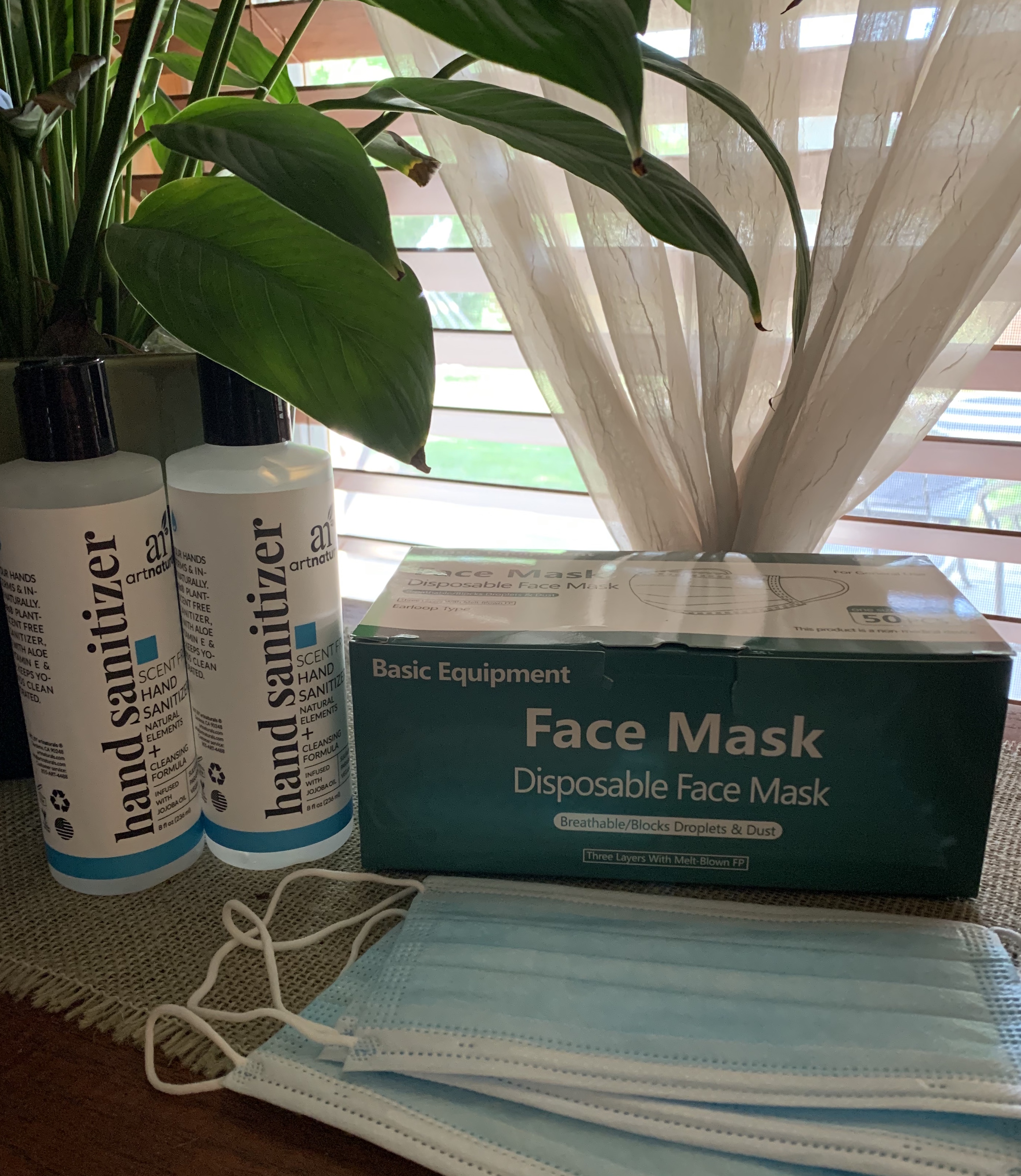
Life isn’t a short game.  It is a journey.  Are you able, or more accurately, are you willing to make sacrifices, submit to those who know more than you do, and go without?  Can you pause, wait, and humble yourself before God and neighbor?  My prayer is that each of us will respond accordingly and do our part.  Stay home, wear the mask when necessary, and don’t forget to wash your hands.

Humble yourselves before the Lord, and he will lift you up.   James 4:10

From Gray to Grace

Death is not the opposite of life, but a part of it.  Haruki Murakami

Last week’s tragedy will never make sense.  No answer will ever be good enough.  Understanding will likely never come.  A life cut short.  Senseless violence.

IMG_3392

ERNIE ORTIZ 1949-2019

It has been said that we’re all one phone call away from dropping to our knees. And nothing has ever been more true. Human life is fragile and fleeting. Most of us naively walking around as if we have all the time in the world, as if our days are not numbered, as if we have some sense of control…and sadly, we do not.  And while life itself is a gift, we don’t always live like it.  Our words, our actions, our brokenness speak for themselves reminding us that we are all fallible humans.  Even the best of us walk the line between sinner and saint daily.

So it is no surprise that at some point, we all find ourselves here…struggling with loss in its many forms, be it friendships, relationships, marriages, jobs, hopes or dreams, but I feel it is the loss of life that hurts the most.  It’s inescapable.  Unavoidable.  The grief, the permanency, maybe even the unknown…it fills our thoughts, occupies our hearts and often leaves wounds that never quite heal.

Statistically, death occurs on a bell curve with our most vulnerable moments at the beginning and the end of our life spans.  If you’re lucky, it’s something one only deals with during their latter days.  We know that death due to age, illness, and disease remain tragic, but a life taken too soon, a life snuffed out, a life robbed at any age hurts as if it’s been compounded tenfold.  Many will tell you that time heals all wounds.  Maybe.  More realistically though, time only allows for space between the hurt.

Finding peace is all circumstances isn’t easy.  In fact, it’s a lot of work.  If you’re not a Christian, I honestly don’t know how you do it.  For me, knowing that I have a God who walks beside me is something that I don’t take for granted.  When I am weak, He is my strength.  When I am lost, He is my rock.  Christ’s ultimate sacrifice reminds us that death doesn’t have the final say.  Uncle Ernie was a believer, I take comfort in that.  Our lives, our very existence is not in vain.  On the mountaintop and in the valley, there remains a plan and a purpose for each of us.

In the days and weeks to come, stories will be told and photos will be shared. In talking with family, we have chosen to focus on the “dash” and celebrate a life LIVED.  As poet Linda Ellis explains, “He noted that first came the date of birth and spoke of the following date with tears, but he said what mattered most of all was the dash between those years.”  And what a dash it was!  Countless adventures, innumerable memories, and a bounty of friends.

When you’re a kid, life seems so black and white.  There’s good and evil.  Right and wrong.  The lines are clearly drawn.  As we grow up, move from adolescence through adulthood, we realize that life is actually more of a marbled gray.  Dark shades, complicated, stressful, and uneven as we navigate day to day living among the broken, but intermixed with bright hues, beautiful, joyful, and full of promise!  As we all inch forward, I pray that we move from that marbled gray into grace!  Life is too short to live any other way.  Let us approach each other more tenderly and offer love, patience, and kind words…only then can we truly find resolve (and maybe even peace) along the way.

Rest Easy, Uncle Ernie.

For we know that if the earthly tent we live in is destroyed, we have a building from God, a house not made with hands, eternal in the heavens. 

2 Corinthians 5:1

College Bound? READ THIS.

“I’m not telling you it’s going to be easy – I’m telling you it’s going to be worth it.”  -Art Williams

College in the 1990s

Congratulations!  You’re about to embark on an exciting adventure!  And if you’re anything like I was at age 18, then you had one foot halfway out the door during senior year.  I originally offered this advice to my niece when she made her BIG move, but I thought I would offer it again here.  (Original post-January 5, 2017.)

  1. Moving away from home/going to school takes guts. Not everyone can do it. Not everyone should do it, but having the courage to walk away from everything you know and try something new/exciting/scary and uncomfortable deserves some major props. In doing this, you have already proven one thing: you are WILLING to take chances. Kudos.
  2. In many ways, you’ve been preparing for this your whole life and in many other ways, you’re not prepared at all. This is okay. In fact, it’s better than okay. It’s absolutely normal.
  3. Good things will happen and bad things will happen, too. How you deal with these things will make all the difference. My favorite quote is by author Og Mandino. It says “Count your blessings, proclaim your rarity, go another mile, USE WISELY YOUR POWER OF CHOICE, and one more–to fulfill the other four–do all things with love…love for yourself, love for all others, and love for GOD….You Are the Greatest Miracle in The World.” You can always choose. Remember that no hole is too deep, no place is too far for redemption.
  4. Never date a man with hair better than your own. Random, I know…but really. Who needs the competition? I actually came up with this rule while visiting friends at K-State. I can’t remember what the circumstances were exactly, but it’s a rule that has served me well.
  5. Talk to God (a lot) and don’t forget to listen, too. Although I think you should go to church, I have to admit that I didn’t attend while I was in college. I can honestly tell you that I missed out and I would definitely do this part differently today. Nonetheless, I did a whole lot of praying during that time and LISTENING to God, too. This saved my bacon more than once and I am eternally grateful. Looking back I can clearly see God at work during my college years. Make your relationship with Him a priority.
  6. Practice the “pause.” I didn’t come up with this…I’m not sure who did, but it makes a lot of sense and it may actually save your life someday. “When in doubt, pause. When angry, pause. When tired, pause. When stressed, pause. And when you pause, always pray.”
  7. Keep an eye on your drink. Again, another random one…but this is vital. There are bad guys (and girls) out there. People who do not have your best interest at heart. People who will try to use (and abuse) you and hurt you to satisfy their own evil desires. These people will buy you drinks and worse, they may even spike your drink. I made it a practice to never, ever, EVER accept a drink from a stranger (and eventually I didn’t accept any drinks at all.) It was not always well received. I’ve been called countless names, been yelled at, and made fun of. I didn’t care. In fact, it just proved that this was someone who I definitely didn’t have any business hanging out with. If someone wants to buy you a drink, great. The two of you can go up to the bar and order it together. At a party, keep in mind that you are perfectly capable of pouring your own drink. Carry a water bottle (drunkenness is overrated anyway.) Be on guard. Protect yourself…and look after your friends, too.
  8. You’re not expected to peak now. While these clearly are some of the best days of your life…they’re not the only days of your life. Someday you might choose to travel, land your dream job, become President, meet an awesome guy, have a fabulous wedding, start your own business, become a mother…the list goes on and on. Life is a series of journeys. Never think that your best days are behind you…always look forward.
  9. Trust your gut…that’s the Holy Spirit at work. Look people in the eye, but more importantly, watch what they say and do. I wholeheartedly believe God speaks to us and a little warning light goes off when we’re in bad company. Do not ignore this! Women (especially) tend to discount this small little voice. We want to be nice, we want to give people the benefit of the doubt, we don’t want to seem childish or afraid…you get the point. So we make nice…and often times this puts us in very vulnerable situations. If it doesn’t feel right, it isn’t right. End of story. You owe no one an explanation.
  10. Finally, know this…you can always go home. ALWAYS. There is no shame. You’ve stepped out once, you can and will do it again. This IS life. Having a home base is a luxury not afforded to everyone. You have a family that would move mountains for you (just ask.) This is an incredible blessing.

SPECIAL NOTE:  You cannot live on Ramen.  You will try (we all do.)  But I repeat, you cannot live on Ramen.  

Remember, there are a lot of people rooting for you, kid!  You got THIS.  Welcome to your next adventure!

The old is gone.  The new is here.  2 Corinthians 5:17

KEEP CALM, Summer’s Coming (15 Sunshine-Inspired Songs) SONG 11

Golden State of mind.  –author unknown

There are moments where time simply stands still.  In those moments a solid memory is formed…and that’s where the next song on the list comes in.  “Someday” by the group Sugar Ray (released in 1999) was the soundtrack to an absolutely perfect space in time for me.  As a transplant to California, I quickly learned that there’s a learning curve to navigating the Golden State lifestyle.  First, practically everyone is beautiful.  People dress differently in Cali and carry themselves with a lot of confidence.  Next, most things costs way too much, really.  And finally, driving there is a sport.  Still, after a few months, I finally felt like I was finding my way.  This was home.It’s hard not to love California…amazing scenery and that salty, ocean smell.  I recall driving on the 101, windows rolled down, the rolling hills of Marin County in the background when this song came on the radio.  A song about having no regrets, a song about believing in the choices you have made, basically a song about contentment.  And that’s exactly what I felt in that moment.  For whatever reason, whatever my destiny was, however my purpose on this planet worked out–I wholeheartedly knew I was exactly where I was supposed to be at that particular place in time.  I’ve never forgotten that feeling.

Lead singer, Mark McGrath has said in interview that the group was about having fun and seeing just how far they could go.  While Sugar Ray actually played a wide variety of music styles…it was their pop rock, upbeat stuff that launched the group to fame.  “Someday” was a top ten hit on the Billboard Hot 100, Hot Modern Rock Tracks, Hot 100 Airplay and on the Canadian charts, as well.  The band enjoyed great success with their trademark southern California vibe.

Whenever I hear the song, I’m transplanted back to that time (I can even smell the ocean!)  My life has changed a great deal since them.  I’ve been fortunate enough to have had other experiences like the one that day.  Today, I refer to them as “God-moments,”  little assurances where I know I’m in just the right place, and I am so grateful.

UP NEXT:  Song 12…”run, run lost boy….”