
Remember me
Though I have to say goodbye
Remember me
Don’t let it make you cry
For even if I’m far away I hold you in my heart
I sing a secret song to you each night we are apartRemember me
REMEMBER ME (LULLABY)
Though I have to travel far
Remember me
Each time you hear a sad guitar
Know that I’m with you the only way that I can be
Until you’re in my arms again
Remember me
Let’s be honest—thanks to popular culture, there is curiosity around El Día de Los Muertos, or Day of the Dead. This Mexican holiday is celebrated on November 1 and 2 to honor and remember deceased loved ones. It is a joy-filled remembrance of life that involves building altars (ofrendas) with offerings, visiting and/or decorating graves, and sharing memories with family. The holiday blends ancient Mesoamerican and Spanish traditions into a celebration that welcomes the spirits of the dead for a brief reunion.
In recent years, this observance has taken on new meaning for me as more loved ones have passed from this life. It may sound selfish, but the idea of dedicating time to remember the most important people in our lives feels far more significant than some of the material-centered holidays we often celebrate. And while Día de los Muertos can be a grand, communal celebration, it can also be quietly observed in solitude.
Lately on social media, many creators have shared their stories, videos, and photos of their ofrendas. Some are elaborate and ornate, while others are simple and serene. Both are equally meaningful. At the same time, I’ve noticed conversations about who is “allowed” to participate, with some insisting on cultural credentials to take part in this day of remembrance. Yet, the overwhelming sentiment remains: we’ve all experienced loss, and the desire to honor those who shaped us is something universal.
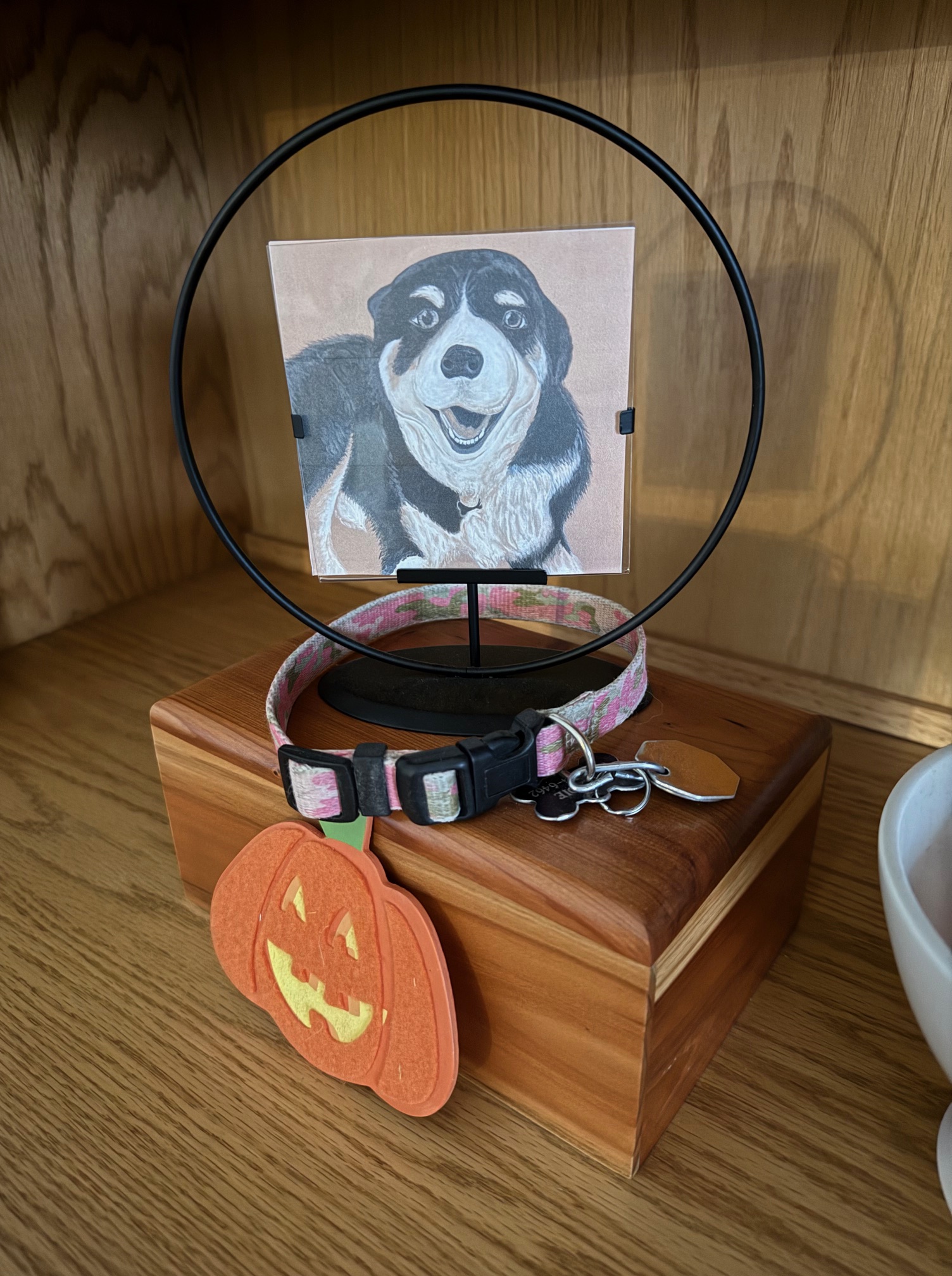
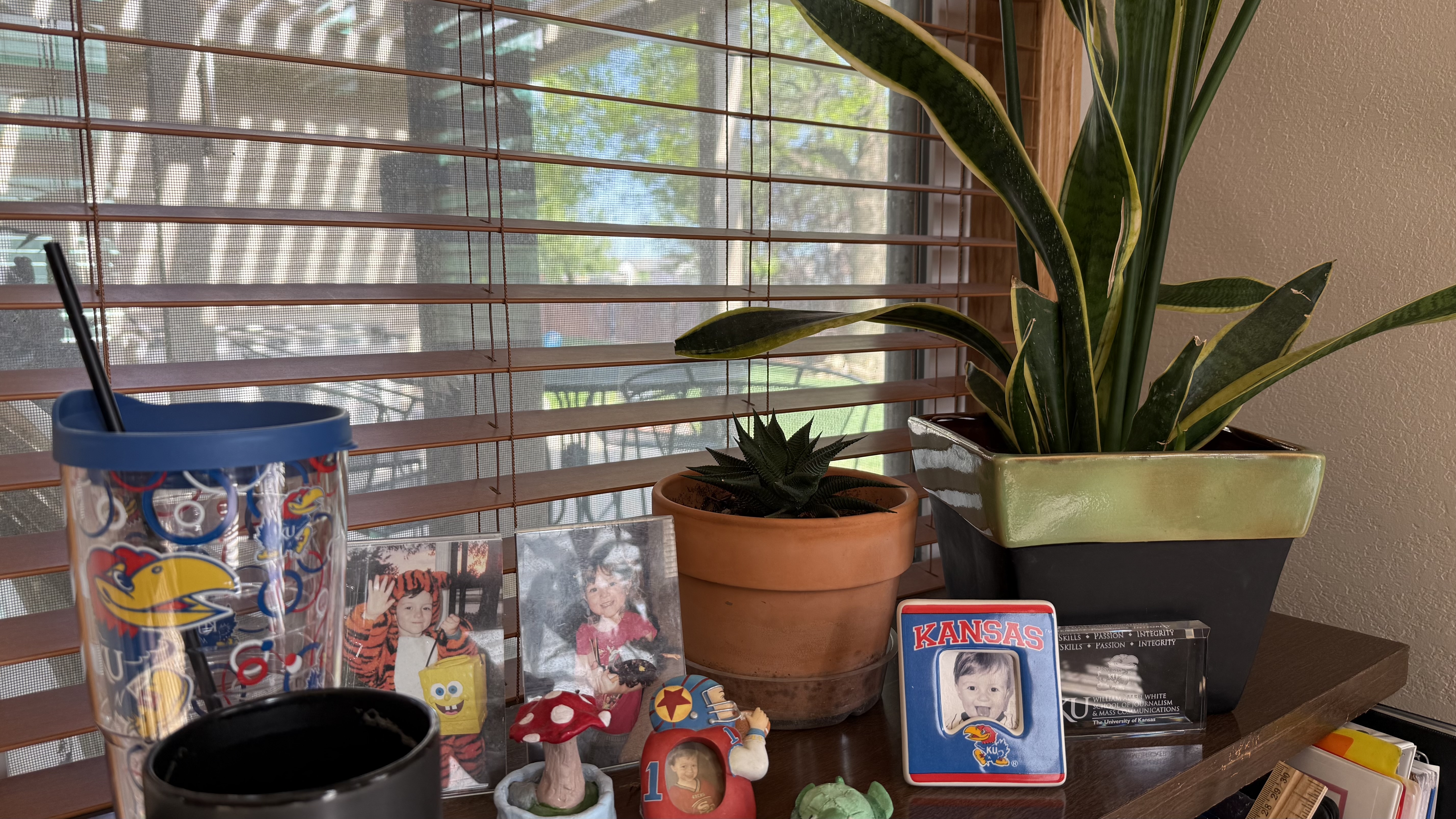
A few days ago, I began putting out my Halloween decorations. As a 50-year-old empty nester, I don’t need to do this—and some might argue I shouldn’t—but Halloween has always been one of my favorite holidays. I have such fond memories of it from childhood and of celebrating it with my own kids. What started as a plan to display a few old photos of my kids in their costumes quickly turned into a full-blown decorating session. On the built-in shelves, I decorated every corner, including two spaces where I already have photos of my mom and mother-in-law, and my sweet dog, Madeline.
These memorials stay out year-round. In realizing that, I saw that I had already created my own version of an ofrenda—a quieter one, perhaps, but deeply meaningful. It’s something I see every day. A space that holds memories 24/7. A space I could never imagine packing away. Every time I look at it, I thank God for blessing me with such beautiful souls in my life, even if only for a season.
In the Bible, altars were sacred spaces for worship, sacrifice, and offering—first built by Noah, Abraham, and others. They were places of remembrance, of unity, of meeting with God. Thinking about that reminds me of one of my favorite passages, Joshua 4:6–7, where God tells His people to stack stones by the Jordan River as a lasting reminder of what He did for them:
“In the future, when your children ask you, ‘What do these stones mean?’ tell them…”
Both the altar and the memorial stones tell the same story: that remembering matters. That marking what—and who—has shaped us is a sacred act.
I’m not going to tell you to build an altar in your home or decorate an ofrenda. But I will encourage you to make space for remembrance—a moment, a corner, a conversation, or even a prayer—to honor those who came before you and hold space in your heart. Whether through tradition, faith, or personal reflection, remembrance roots us in gratitude.
After all, memory itself is sacred.
Now, tell their stories.









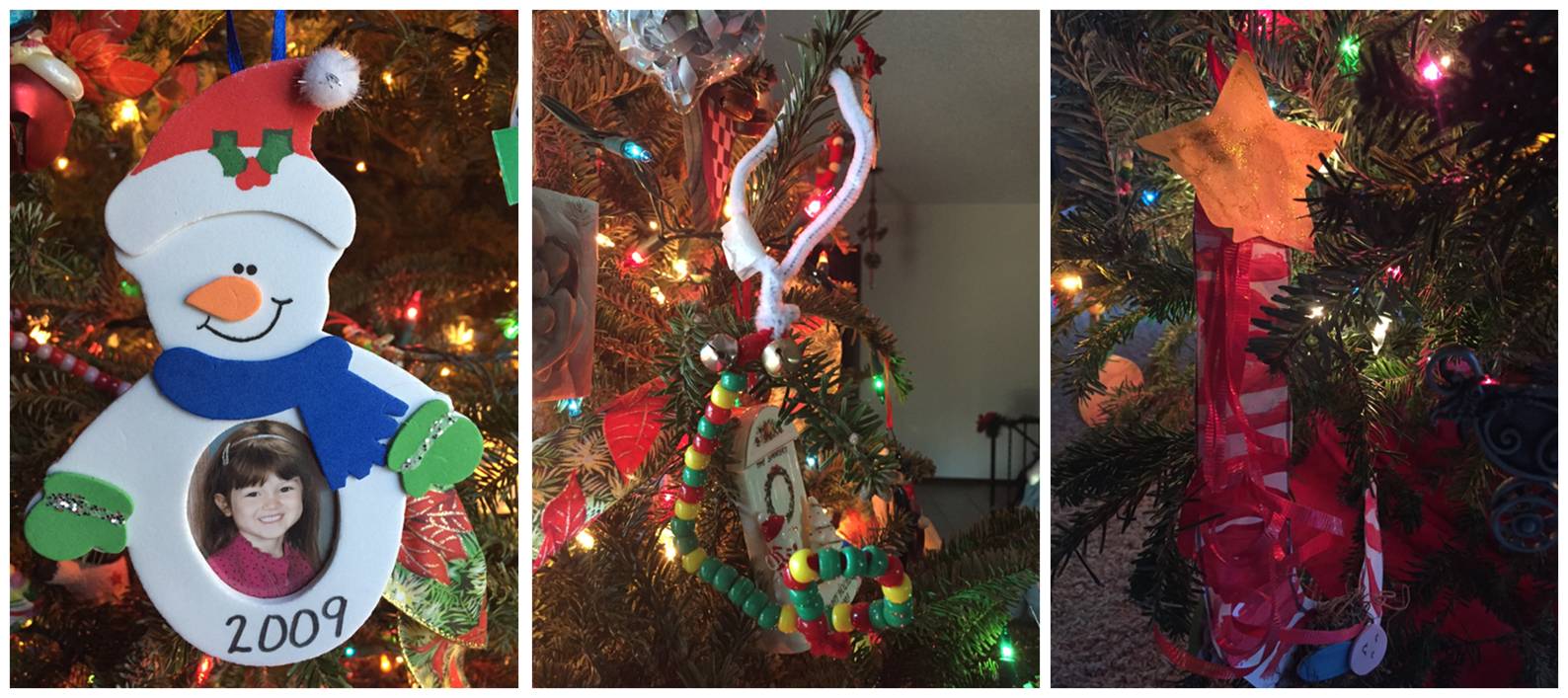 As you can imagine, after more than a decade of “contributions” amassed from school AND church, we now have quite a collection going. Add to it EVERY ornament we have ever received from relatives, friends, plus our church family, and it amounts to 7 boxes of Christmas knickknack goodies. Every year the tree is quite full (this may be an important factor when you consider the number of times the tree has fallen over the years,) but I wouldn’t have it any other way. The Spencer Family Christmas tree is full of as many stories and memories as it is ornaments. This year the kids asked me if we really had to hang every last trinket from the boxes. I guess they thought that maybe the “bead ornament” (there really is no other name for it since it resembles absolutely NOTHING ever known to man) and the “paper Jesus candy cane” may have seen better days. “If there’s room on the tree, then there’s room for it,” was my constant reply. And while I think the “all-things, everything” kind of Christmas tree has roots in my husband’s Christmas tradition, he is the one who announces every year that “it looks like Christmas threw up in here!” At least he says it with a smile.
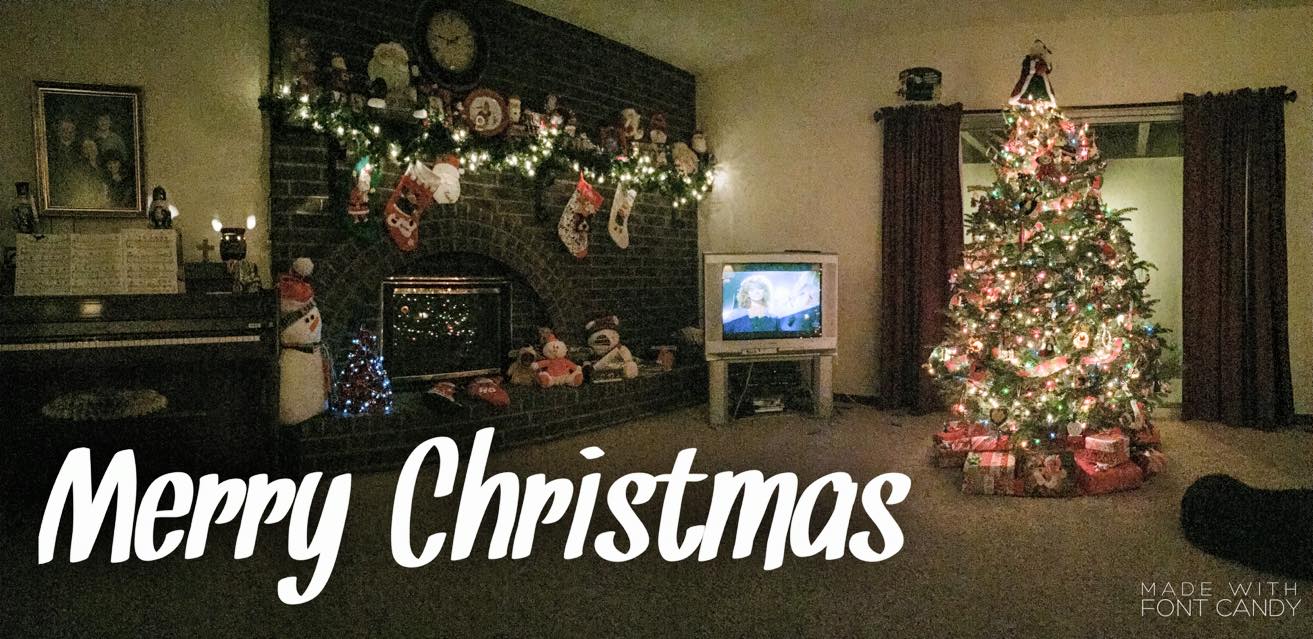 Our tree is still up (it’s New Year’s Day,) it’s leaning to the side as is its custom during the 12 Days of Christmas, and the ornaments are taking themselves down (with a mini thud!) The Christmas “spew” extends well beyond the tree to the fireplace mantel, hearth, the piano and into the dining room, and it will…for at least another week. Yes, it STILL looks like Christmas in here and everywhere we go…even if it’s the regurgitated type. Falalalala Lalalala!
 hymningandhaing